The Invisible Weight of Ministry Leadership

Strong leadership in ministry is often associated with endurance. Leaders who keep showing up. Leaders who carry the weight. Leaders who hold everything together quietly. But sustainability does not come from carrying more. It comes from not carrying it alone.

Across congregations, synods, presbyteries, and ministry systems, many leaders are navigating layers of complexity that extend far beyond what is visible on Sunday mornings.

And often, they are doing it in isolation.

The Invisible Weight of Ministry Leadership

Ministry leadership involves far more than preaching, teaching, or pastoral care. Leaders are simultaneously holding:

• Financial pressures

• Staff dynamics

• Congregational expectations

• Historical tensions

• Community needs

• Long-term vision decisions

• Denominational relationships

• Organizational sustainability

These responsibilities are interconnected. Decisions in one area ripple into others. Over time, leadership becomes less about inspiration and more about navigation. And navigation requires support.

Why Leaders End Up Carrying Too Much

Most leaders do not intentionally isolate themselves. It happens gradually. Sometimes it begins with a desire to protect staff from stress. Sometimes it comes from unclear governance structures. Sometimes it stems from trust that has not yet been built. Sometimes it is inherited from past leadership patterns.

Often, it is reinforced by a cultural belief that strong leaders “handle it.” But when systems rely on one person holding the weight, sustainability becomes fragile.

Isolation Is Not a Leadership Strategy

Isolation can look like responsibility. But it often leads to fatigue, slower decision-making, and diminished clarity. Healthy ministry systems distribute leadership intentionally.

They create:

• Clear authority lines

• Defined decision-making processes

• Shared ownership of direction

• Support structures for leaders

• Communication rhythms that reduce uncertainty

These systems don’t remove responsibility. They make it sustainable.

Shared Leadership Strengthens the Whole System

When leadership becomes shared, several shifts happen:

• Staff become more engaged

• Volunteers understand their role more clearly

• Decision-making becomes more consistent

• Vision becomes more stable

• Leaders regain space to think strategically

Shared leadership is not about reducing accountability. It is about strengthening the entire organizational ecosystem.

The Role of Intentional Support

Support for ministry leaders doesn’t happen accidentally.

It requires:

• Naming complexity honestly

• Mapping systems clearly

• Identifying pressure points

• Building leadership capacity across roles

• Establishing rhythms for reflection and recalibration

Healthy organizations do not remove challenges. They create structures where challenges can be navigated collectively.

Moving Toward Sustainability

Leadership sustainability is not about doing less. It is about holding responsibility differently. When leaders are supported by systems — not just expectations — they regain clarity, energy, and long-term perspective. Ministry becomes less reactive. Decision-making becomes steadier. And the organization becomes more resilient.

Strong leadership does not mean carrying everything. It means building environments where leadership can be shared, supported, and sustained.

Holy Cow Consulting partners with churches and ministry systems to create healthy leadership structures, clarify decision-making, and build sustainable organizational rhythms.

Learn more at: https://holycowconsulting.com/

How Synched™ Aligns Ministries for the New Year

“When a congregation moves together, it thrives together.”

Every January, church leaders set goals for the year ahead — more outreach, stronger giving, deeper connection. But too often, those goals exist in silos. The outreach team moves one way, the worship team another, and the finance team just tries to keep up.

That’s why Holy Cow! Consulting created Synched™ — a process that helps churches plan holistically by aligning every ministry, mission, and member around a shared vision.

What Is Synched™?

Synched™ is more than a planning tool — it’s a discernment process designed to bring unity and direction to every part of your church.

When your congregation is synched, it means:

  • Your mission, ministries, and members are pulling in the same direction.
  • Your resources stretch further, without stretching people thin.
  • Your leaders can make decisions confidently, backed by clear data.

“When a congregation is in sync, all ministries are robust in their own right, and each helps advance the church’s mission.”

How Synched™ Works

Synched™ takes your existing data — from your CAT™ results, member input, and ministry metrics — and turns it into a clear, actionable plan.

The process helps your leadership:

1️⃣ Identify alignment between mission and ministry.

2️⃣ Highlight areas where time or energy are being spent without return.

3️⃣ Ensure every program, budget, and effort moves toward the same purpose.

It’s not about doing more. It’s about doing what matters together.

Why Alignment Matters

A church can have great ministries — but if they’re not aligned, they can accidentally compete for time, volunteers, and focus.

Synched™ helps you:

• See where your ministries naturally complement each other.

• Spot areas of overlap, tension, or fatigue.

• Clarify what success really looks like in your context.

When every team sees how their work connects to the whole mission, collaboration replaces competition.

“Alignment turns effort into impact.”

Faith + Data = Direction

Synched™ is guided by faith, but grounded in data. It integrates benchmarking insights from the CAT™ with your church’s lived experience to create a plan that’s both spiritual and strategic. This ensures your next chapter isn’t built on guesswork — it’s built on shared understanding.  

Start the Year Synched

The new year is the perfect time to pause, realign, and lead with clarity. If your 2025 felt scattered or if your ministries feel disconnected, Synched™ will help bring everything — and everyone — together. ✨

Align your leadership. ✨ Strengthen your mission. ✨ Reconnect your ministries.

👉 Learn More About Synched™

👉 Schedule a Consultation

Because guessing shouldn’t be part of your planning.

“When your church moves in the same direction — guided by the Spirit, grounded in data — growth becomes natural.”

— Emily Swanson, Owner & President, Holy Cow! Consulting

Transparency Sparks Generosity: How Data Builds Trust in Stewardship

“We can’t expect generosity if we don’t first build trust.”

As stewardship season approaches, church leaders across the country are inviting members to give, reflect, and plan for the future. But here’s the truth: you can’t inspire generosity without first building trust.

Trust begins with listening — and not just to the loudest voices. That’s where data becomes your most faithful partner. The Link Between Data and Trust When members believe their leaders see and understand them, generosity follows. But without data, leaders often rely on surface-level conversations or assumptions.

The Congregation Assessment Tool (CAT™) takes the guesswork out of understanding what your people think and feel — especially when it comes to giving.

With the CAT™, you’ll discover:

• How confident your members are in your leadership and financial transparency.

• What motivates their giving — obligation, gratitude, or shared mission.

• Whether your congregation feels aligned around a clear vision for the future.

When you can point to data — not just anecdotes — members begin to trust the process.

Why Data Strengthens Stewardship Campaigns

A strong stewardship campaign isn’t about raising money. It’s about deepening commitment and purpose. When you use data to show transparency and alignment, you send a powerful message: “We’ve listened. We’ve learned. And we’re stewarding your gifts with clarity and care.”

The Stewardship and Strategic Planning Modules within the CAT™ help you understand:

  • How informed members are about where money goes.
  • How strategically aligned is your congregation around mission and resources.
  • How your community perceives generosity, abundance, and trust.

This information helps you shape communication that resonates with both the heart and the head. Real Churches. Real Impact.

One congregation in the Midwest used their CAT™ results before launching a major stewardship campaign. Their leadership discovered that many members didn’t understand how funds were allocated — not because of mistrust, but because of lack of communication.

By addressing those gaps, the church built transparency, shared clear goals, and saw participation rise significantly the following year.

“The CAT™ showed us where our members were confused — and helped us build confidence before we ever asked for a pledge.”  

Trust Is the First Step Toward Generosity; When data confirms what you feel in your heart, it gives you the confidence to lead faithfully and communicate transparently.

At Holy Cow! Consulting, we believe that trust is stewardship — and it starts with truly listening to your people.

✨ Build that trust. ✨ Steward with clarity. ✨ Lead with confidence.

👉 Learn More About the CAT™

👉 Start Your Stewardship Module Today

As we like to say around here… “Because guessing shouldn’t be part of your planning.”

— Emily Swanson, Owner & President, Holy Cow! Consulting

5 Reasons Young People Aren’t Attending Church (And What You Can Do)

Church leaders everywhere are asking the same question: “Where are the young people?”

Attendance among Millennials and Gen Z has been steadily declining. Many congregations try new programs or events to bring them back, but often, the root causes go deeper than surface solutions.

That’s where the CAT™ (Congregation Assessment Tool) makes a difference. Instead of guessing why younger generations aren’t engaging, CAT™ reveals the evidence-based data your church needs to see clearly.

5 Reasons Young People Aren’t Attending Church

1. They don’t feel seen or heard.

Young people often feel like decisions are made without their voices.

2. They’re skeptical of institutions.

Trust in organized religion has declined nationwide. Without transparency, they hesitate to commit.

3. They want authenticity. Young adults spot inauthenticity quickly.

If words and actions don’t align, they disengage.

4. They’re overloaded with competing priorities.

Between school, work, and social life, church can feel like “just another thing.”

5. They need a safe place to ask questions.

When churches avoid hard conversations, younger people look elsewhere for community.

What Churches Can Do

The good news: solutions exist — but they aren’t “one-size-fits-all.” What works in one congregation may not work in another. That’s why the CAT™ is so valuable.

With data from over 6,000 congregations, the CAT™ helps leaders:

• Identify if young people feel engaged or overlooked

• Measure satisfaction and readiness for change

• Understand what ministries or messages resonate with younger voices

• Create a roadmap for meaningful, authentic connection

In short: The CAT™ takes the guesswork out of reaching the next generation.

Ready to Listen Deeper?

If your church is worried about declining youth participation, you don’t have to guess.

The CAT™ can help you uncover the real story and take your next faithful steps with clarity.

👉 [Learn More About the CAT™]

👉 [Schedule Your CAT™ Assessment]

🐮 Why 6,000+ Congregations Trust the CAT™ Over Standard Surveys

Church leaders are constantly listening to their people. Between worship, meetings, and casual conversations, you hear a lot about what members think and feel. But when it comes time to make big decisions, informal conversations can only take you so far.

That’s why we created the CAT™ (Congregation Assessment Tool) — and why it’s unlike any other survey you’ve ever seen.

What Makes the CAT™ Unique?

The CAT™ is the only assessment of its kind, available exclusively through Holy Cow! Consulting.

Here’s what sets it apart:

🐮 Exclusive: No other organization offers the CAT™.

🐮 Evidence-Based: Built with sociological rigor, grounded in Christian ministry.

🐮 Benchmarked: Your results aren’t floating in isolation — they’re compared against data from more than 6,000 congregations nationwide.

This means when 60% of your members agree on something, you’re not left wondering if that’s “good” or “bad.” With benchmarks, you see what those numbers really mean compared to thousands of churches like yours.

Why Not Just Rely on Conversations?

It’s true — leaders are constantly in dialogue with their people. But here’s the problem:

🐮 People often hold back what they really think.

🐮 Leaders usually hear from the same small group of voices.

🐮 Without benchmarks, you can’t see the bigger picture.

The CAT™ gives every member a chance to be heard — not just the most vocal. And it translates those voices into clear, actionable insights.

Real-World Impact

Here’s how one church described their experience:

“Our work with Holy Cow! was insightful and flexible. The CAT™ helped us affirm where we are and gave us clarity on where to grow. It sparked conversations we could never have had without this data.”

– Church of St. Michael & St. George, St. Louis, MO

Stories like this are common. For many churches, the CAT™ becomes the turning point that helps leadership teams move from uncertainty to clarity.

Ready to Take the Next Step?

If you’re tired of guessing and ready to start leading with confidence, the CAT™ is here for you.

👉 [Learn More About the CAT™]

👉 [Schedule Your CAT™ Assessment]

Until the cows come home.

Emily Swanson

Owner and President of Holy Cow! Consulting

What We Do

When Holy Cow! Consulting began its work many years ago we were offering something different than other church consulting – data that reflected the thoughts, feelings, and health of their church. It was a step beyond because it eliminated the guesswork out of the process and provided reliable methods for church leadership to make informed decisions. As we continued to grow, we were able to benchmark our data with other churches in the region, then the state, and then across the nation. This expanded what we could offer, it became much more than just raw data but an opportunity to know what the comparative data looked like. We could determine what our church experience needed to look like and what we could focus on first to make that happen.

And time flew and we are still here! Over the last 28 years, Holy Cow! Consulting has worked with close to 7,000 congregations across the United States and Canada, with over 2 million individual responses. We help congregations use a databased approach to determine needed strategic steps and what clergy would be good a fit for those needs. What we find years later, and with an even more robust data set, is that this work could not be timely.  As congregations experience shorter clergy tenures and more clergy transitions, financial concerns, and smaller attendance, it is even more important for them to reexamine their purpose and vision of their future. It is crucial for congregations not only to be prepared to deal with any congregational season but also to be skilled at navigating those changes.  

We are always reminded in our work that congregations are allowed to and should have hope.  If there is a clear shift from the scarcity mindset of what congregations don’t have to an intentional mindset of the resources that they do have and how they can be best used, then congregations can become healthy, nimble organizations with ownership over where God is calling them to be.  

We are grateful for all the congregations that have partnered with us over the years. It is a blessing to see all of God’s people doing the work. And, for those we have not met yet, we look forward to the work ahead.

Until then, as my grandpa used to say, we will be here until the cows come home.

Emily Swanson

Owner and President of Holy Cow! Consulting

Blessed Assurance and the Circles of Control

by Emily Swanson, Holy Cow! Consulting

I am currently working with a church in Indiana, and we are halfway through a strategic planning process. My first meeting with them in person was to review their Congregation Assessment Tool results. It was early January and extremely snowy. We were settling into writing 2025 on all the things – from agendas to signatures. In the middle of the meeting, the group shared that at the beginning of the year, each person in the congregation gets a star with a word. I stated that I loved that idea, so at the break, one of the women grabbed the basket for me to blind draw my word. My paper star said “assurance.”

My formal training is not in theology but in a completely different world so, in my understanding of the word “assurance,” I think of conveying property titles which sounds incredibly boring. But Meriam-Webster also defines the word as “being of a certain mind, something that inspires confidence, without self-doubt or uncertainty.” The purpose of this word on my star has felt, perhaps ironically, uncertain.

I often hear that we are in an unprecedented time, and I think, “well, every time we live in is unprecedented if you really think about it.” But as I listen to people around in the country in their churches, I believe unprecedented means we are uncertain and we feel like there is so much to worry about, know about, fix, or do we don’t know where to start. It is overwhelming and deflating.

In 1989, Stephen Covey published his book “The 7 Habits of Highly Affective People.” In the book, he developed the “Circle of Control,” originally a part of Stoic philosophy. This concept contains three circles. The outer layer is the circle of concern, which includes what we worry about, from weather to politics to global events, but ultimately have no control over. The next layer is a circle of influence, which we have some influence or sway over but cannot decide the ultimate outcome. This can be our relationships, final business decisions, or what our kids do when they leave our homes. The middle circle is the circle of control. This circle contains the things we have complete control over.

The concept is based on the understanding that, in the Western world, we all believe we have a lot of control. But in fact, we do not. This perception disconnect leads to anxiety, stress and decreased effectiveness or burn-out. The Circle of Control is not designed to make us feel inept or prove that our perceptions are ridiculous. Instead, it is designed to give us a way to have a proactive focus. It allows us to think about where we can expand our circle influence so that we can move out of the Circle of Concern with clarity and direction. We can use this process in our personal lives but also in our work, our advocacy, our church planning, and other seasons of change.

Here is how to use this process:

  1. Begin by making a list of all of your concerns in the outermost circle. This list includes things that our external in nature and that we worry about but have no control or influence over. Your list of concerns might look something like this: severe weather, environmental issues, road construction, church finances, national trends in church, generation gaps.
  2. In the innermost circle, make a list of things you have control over from start to finish. This list might include actions you personally can take, how you treat others, what you wear, what you think about, or how you react.
  3. Finally, in the middle circle, make a list of the things you have influence over. These are things that you can influence over but cannot control the outcome. These typically encompasses things like relationships, decision-making that you are a part of, communications plans, places where you can give feedback, outreach or ministries you can be a part of or do.
  4. Once we finish our list in the circles process we need to ask these questions to determine the effective next steps:
    • Has anything worked before? For example if we as a church are experiencing a particular period of conflict examining where the church has been through conflict before and how it was resolved well can be helpful. We can also look at other situations in other churches that have been hard that have resulted in a stronger church.
    • What haven’t we tried? Often in the circle of concern we have a lot of things that feel completely out of our hands that leads to frustration. We need to think through these issues by digging a bit deeper. Is there anything we can influence within this realm? If your church is concerned about climate change -can your church start recycling or begin to recycle more? can it partner with a nonprofit that works in environmental safety? can your use of your property include more indigenous plants and use less toxic lawn care products? Once we start breaking bigger issues down into the parts we can influence we begin to feel that we are making change.
    • What if nothing works and this is outside of our control or influence, can we still do good work? The implicit answer here is always yes but we need to be ready to adapt to the current reality. A church that has diminished in size because the community size has decreased significantly might find themselves in this place. The question then becomes how can we create a meaningful legacy in our community that best serves God even if we are not here in 15 years?

This process begins the hard work of naming the things that feel daunting but refusing to feel the lasting effects of defeat and instead look at adaption and creative solutions.

And so I return to the word I drew for 2025 -“assurance.” This had a different connotation for me when this morning, I remembered the hymn that starts with “Blessed Assurance, Jesus is mine.” But I didn’t just remember it from church; I remembered my grandpa singing it in the house when I was young. And the phrase he would belt out from that song that keeps repeating in my head is, “This is my story, this is my song, praising my Savior all day long.” Because, if nothing else, I can control who I focus on in my day-to-day work and what that story is. What my story is. And so can our congregations.

“Blessed Assurance”

Blessed assurance, Jesus is mine
Oh, what a foretaste of glory divine
Heir of salvation, purchase of God
Born of his Spirit, washed in His blood

This is my story, this is my song
Praising my Savior all the day long
This is my story, this is my song
Praising my Savior all the day long

Perfect submission, perfect delight
Visions of rapture now burst on my sight
Angels descending bring from above
Echoes of mercy, whispers of love

This is my story, this is my song
Praising my Savior all the day long
This is my story, this is my song
Praising my Savior all the day long

Music by Phoebe Knapp, Song Lyrics by Fanny Crosby, Copyright 1873

Clarity: What do churches need from their Regional Association?

If you missed our first post on regional associations please check it out here.

In this post we are going to discuss the first “C” to help regional associations (Episcopal Dioceses, Conferences, Synods, Presbyteries) move out of scarcity and tunnel vision and into slack mode, allowing for clarity of purpose and clear alignment. This first “C” is Clarity. There are a few contextual definitions of clarity but for our purposes we are looking at organizational clarity.

In Ann Latham’s book “The Power of Clarity” she writes: 

Clarity requires knowing, with specificity, what you are trying to accomplish, how and with whom, and with the ability to focus so you can be successful. Harnessing the power of clarity, does not just involve the way you communicate, it also involves the way you think and interact.

While this definition is business-focused in nature the same is true for regional associations. We must have this type of clarity to do what God is calling us to do as the church. 

The Landscape assessment allows responders to reflect on the work of their regional association. When over 40,000 people in the data base are asked where they would like their regional association leadership to put energy in the future, we see three consistent top priorities:

  1. Take a leadership role with churches that are struggling
  2. Equip clergy and other leaders in congregations with strategies to enable them to reach new members
  3. Develop a discernment process to rethink how to be a vital church in their specific region. 

The mandate is resoundingly clear – congregations need help, resources, and wisdom. This type of work can only happen if the regional association has clarity around what needs accomplished and how we are going to get that done. And none of that clarity can occur without alignment.

The Why 

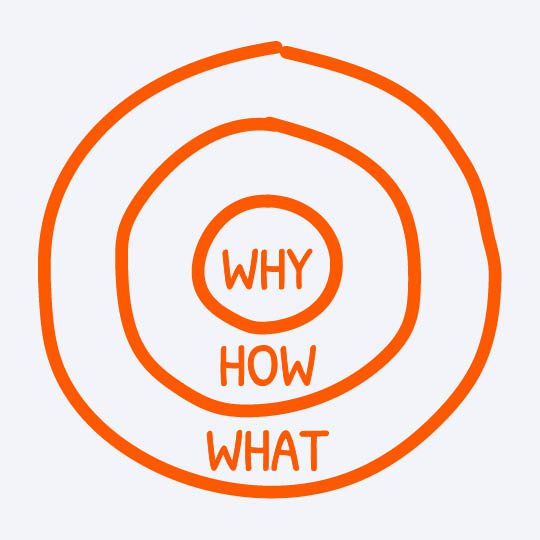
Over a decade ago, Simon Sinek wrote the book “Start with Why.” Sinek frames out his Golden Circle theory examining what inspires action and drives leadership success. The Golden Circle comprises three components: Why, How, and What. The Golden Circle helps any organization better understand why they do what they do. Most regional associations get mired in the “What” – the list of all the programming, committees to do tasks, and meeting agendas they have. Sometimes there is clarity around the “How” – what makes what we do unique and important. But the “Why” is often where we need clarity.

A circle with text on it

Description automatically generated

Over the years of running assessments and conducting listening sessions in regional associations across the country, one thing is very clear. Too frequently, even people who are very engaged in the work of the regional association cannot clearly name the why of its existence. If we can’t name the why for the existence of something we begin to question why it is needed. 

A regional association must be able to name clearly its purpose. It must be able to answer why should anyone, usually congregations it was built to support, care about the work of the regional association? So, the why has to answer the question why do we exist and what is our stated purpose.

It important to remember that creating a nebulous and overreaching “why” is not going to engage people or help staff know how to align their work. A regional association who shares that their purpose is to convert the world to Christ is not truly thinking about their why but is instead overreaching, and failing to acknowledge the top reasons that congregations even care about the work of the system. Perhaps even more concerning, this is also not a measurable why. How could a staff person determine if the work they are doing is converting the world without clear numbers of how many conversions, in how many places, within a set period of time? And is count data really what will engage the system? 

Clarity allows for a why that “taps into the part of the listener’s brain that influences behavior, making it a powerful tool for inspiring and motivating others.” How Great Leaders Inspire Action: Simon Sinek’s Golden Circle, July 2023, Meridan University MBA. For a regional association the why needs to examine why do we matter to the churches we serve and what do we need to do exceptionally well to do that work?

The What and How 

Once that clarity happens alignment is then created with the Why. And the question becomes, with each step, if the behavior exhibited in the work of the regional association was replicated in the churches we are serving would it move them toward or away from our purpose of creating healthy, vital congregations? 

With this clarity, the what and how center around the why so that we are not just doing work because it is on a checklist, we are evolving, adapting and remaining relevant. We can say yes when alignment is clear and no when it is not. Staff structures and committees continue to clarify their purpose so we can ensure the structures and assignments make sense for the work ahead. This is how we begin to diminish burn-out in our staff and committees and can look at gift discernment, having the right people in the right places. 

There is nothing simple about this. It is hard work. But it is work worth doing in this season for regional associations supporting congregations. This work creates a culture that renews the mind, empowers leaders, rewards collaboration, and is authentic. That is the type of culture that makes people want to engage and leads to the very thing God is calling us to be, transformed.

Romans 12:2: Do not be conformed to this world, but be transformed by the renewal of your mind, that by testing you may discern what is the will of God, what is good and acceptable and perfect.

The three “C”s: What do churches need from their Regional Association?

Over the years, we have worked with quite a few regional associations (Episcopal Dioceses, Conferences, Synods, Presbyteries, etc.) across the U.S. using our Landscape assessment, facilitating system-wide listening sessions, and assisting in transition or strategic planning. We have learned a lot in this work and wanted to share some of these findings.

In many of our regional associations, we are in a time of limited financial resources and smaller staffing models. Regional associations often find themselves stretched thin, overburdened and, as one leader at the end of his career shared recently, feeling like they are not making a difference. Many systems have reconfigured staffing with the idea that one person could serve in multiple roles or that splitting roles in different ways will make it more doable and cost effective. Committees are often expanded in the hopes that more hands make lighter work. If accountability is a concern the reaction is often to adjust the role’s definition with more oversight instead of finding the right person for the job. The result of all of this shifting is that very few leaders have taken the time to really assess the purpose of the regional association and how to get there effectively. Instead, decisions are made in reaction to scarcity and burn-out.

In the book Scarcity: The New Science of Having Less and How it Defines Our Lives, authors Sendhil Mullainathan and Eldar Shafir address how scarcity can capture our mind. As we experience joint-scarcity, defined as scarcity of time and finances, we begin to make decisions in a different way. Researcher Daniel Kahneman found that our brain is essentially “of two minds” – a “fast-thinking” largely autonomous system that is responsible for our survival, and our quick reflexes and responses (and also our behavioral defaults that we rely on to make quick decisions that can also form behavioral biases), and a “slow-thinking” mind where conscious rational thinking and decision-making occurs. Over time, that scarcity mind-set begins to not just affect our fast-thinking but also our slow-thinking responses. We reduce our band-width and have tunnel vision.

The best example in regional associations is addressing the issues of the small congregations that are diminishing in attendance numbers and financial resources. Staff and committee members often find themselves addressing these issues with that list of churches in their system, which can be a large list. But this means that time is pulled from other areas that also need attention – clergy transitions, ministries/outreach, mentoring, leadership development.  According to Mullainathan and Shafir, this is called a “bandwidth tax” where so much of the mental energy is devoted to the tunnel and scarcity that less capacity is available for other things. As this continues over time, we get tunnel-vision and find ourselves thinking that our biggest area that needs attention is small congregations. Staffing models are adjusted and committees reconfigured for this need. This work has diminishing returns because it is a continual cycle and a part of the systemic nature of our regional associations. The end result is we see church in decline at an alarming rate and this becomes our narrative, whether it is accurate or not.

As we shift focus the system is not available to provide aid in other places. Congregations with larger attendance and budgets might be in extreme conflict, which will eventually lead to less attenders, but the resources are not built into the system to help. Clergy transitions are happening at perhaps a higher rate but we have stretched the system to such an extent that the transition process is on auto-pilot. So, while the regional association has a plan for smaller congregations and the current fire is at least under control, other things that need attention are in a worse state.

What helps us move out of that scarcity mind-set into a better balance? According to experts in scarcity, it is a concept called “slack.” Slack occurs when a person recognizes that we really can choose a “yes and” approach. This comes from clarity of purpose and clear alignment with that purpose. In the example above, the thought process moves from “we have a lot of small congregations in crisis” to “what is our commitment for support for all of our congregations at all stages of their lives.” And then we ask “how is that commitment built in healthy and best practices for all of our congregations.”

Over the next few weeks, we will be sharing the three things that congregations need from their regional associations. They are what we call the three Cs: clarity, consistency, and connection. Clarity allows for congregations to understand what resources are available and how to access them. Consistency means the regional association has built the necessary trust to let congregations know they are there to help in all stages of a congregation’s life. Connection is the very reason that regional associations exist, to create a meaningful relationships and a supportive model between our congregations so that we are all serving Christ together.

These three areas allow regional association to move out of scarcity and tunnel vision and into slack mode. Not doing less, but doing it better.

God in all Things…even data

In our work with congregations, we are incredibly blessed by the people we work alongside. This was the prayer that was written by a member of a search committee for a church in Colorado we had the opportunity to work with this weekend. It was a reminder that data is a way to listen deeply, think creatively, and move forward together. And that God is in all things. 

A Prayer for the CAT Interpretation:

God, we give thanks for each and every member of our parish family.  We are grateful to those who completed the survey.  We love and support those for whom the survey was outside their comfort zone.  
We gather this morning to see our parish family as they see themselves.  We know that you touched every heart as they contributed their individual voices to this compilation.  Help us to hear their wants, needs, hopes, fears, wishes, and longings.  Help us to accept where this information tells us we are.  Help us to understand where this information can take us.  Help us to recognize the limitations of the information.  Help us to embrace the possibilities of what and where we are called by you to grow. 
Establish in us clarity to put into words that express who and what we are, who and what we want to become so that the one you have chosen for us will recognize us as the flock for them.  Establish in them the clarity to put into words who and what they are, who and what they want to become so that we with recognize the one you have chosen for us as ours.
In Jesus name we pray.